

Eyeglass Lenses: How to Choose the Right Lens Index
The 2-4-6 Rule for Choosing the Refractive Index of Your Lenses
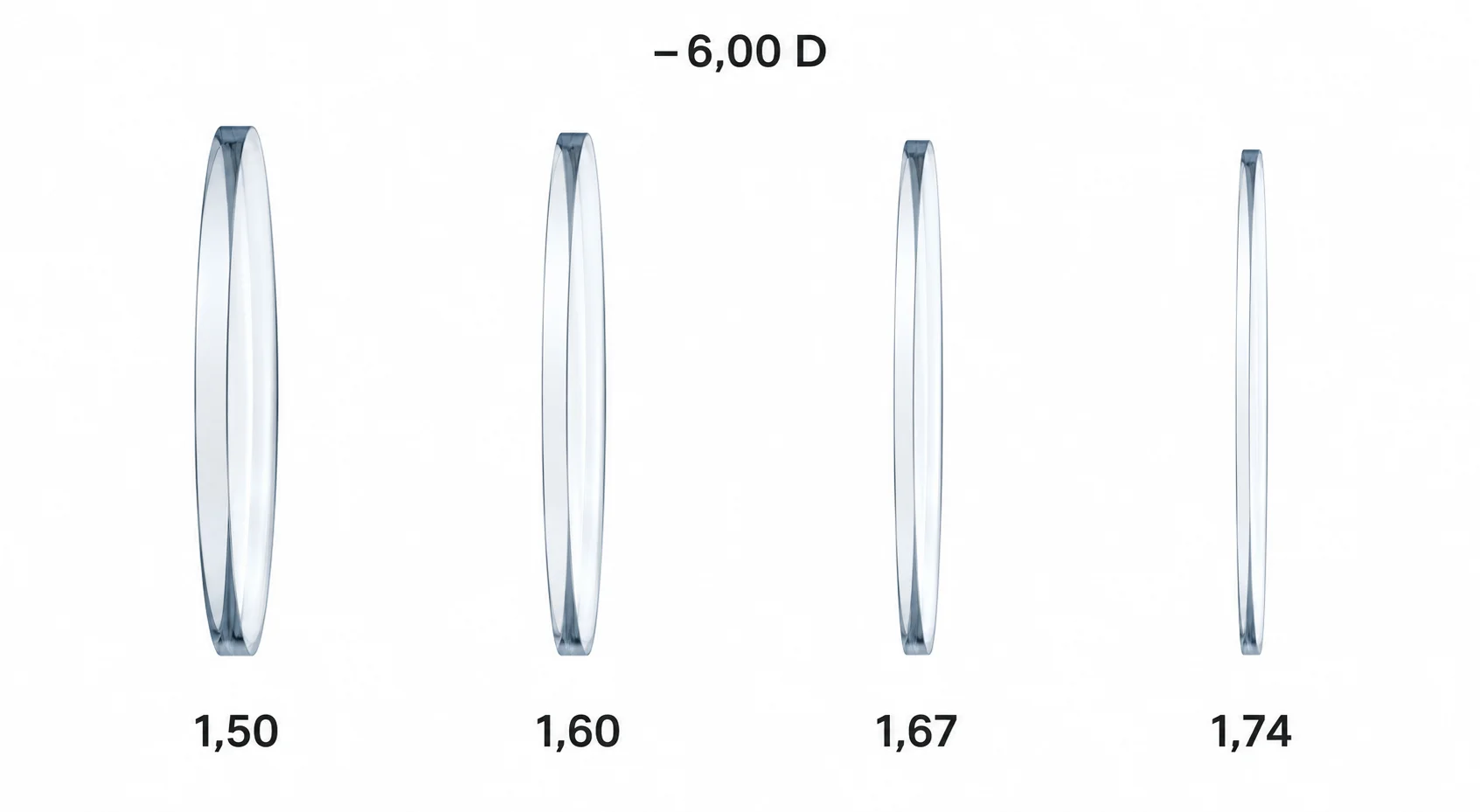
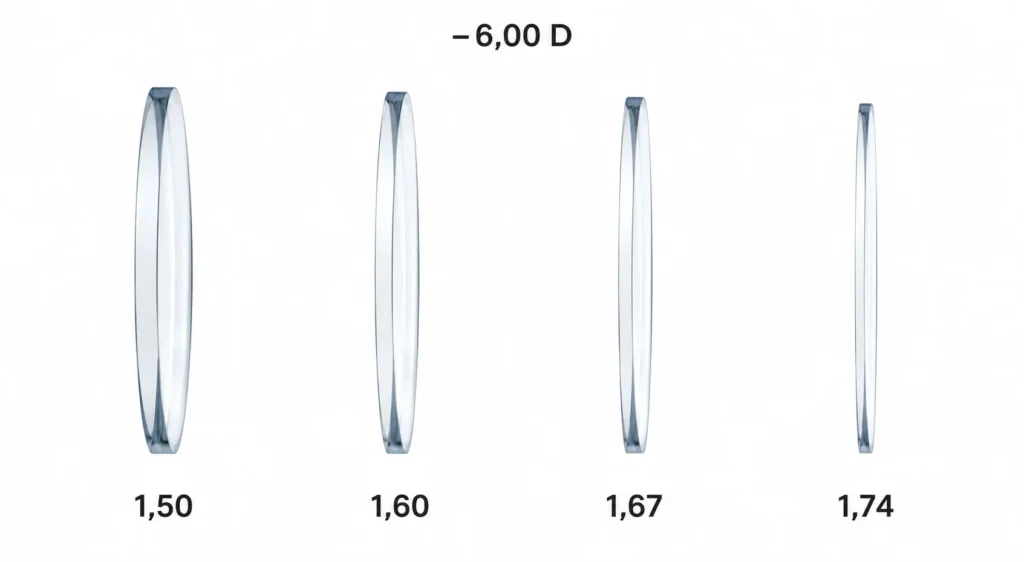
When a prescription is strong, lenses can become thicker and heavier. To reduce their thickness, you can choose a material with a higher refractive index. The higher the index, the thinner the lens can be for the same prescription.
The 2-4-6 rule is a simple way to determine which refractive index is generally appropriate for the strength of your prescription. It applies to both negative prescriptions for myopia and positive prescriptions for hyperopia.
For prescriptions below ±2.00 dioptres, a 1.50 index is usually sufficient. This material provides excellent optical quality and is perfectly suited to mild prescriptions.
Between ±2.00 and ±4.00 dioptres, a 1.60 index generally offers the best balance of thinness, lightness, visual quality, and price. It significantly reduces lens thickness without requiring an unnecessarily high-index material.
Between ±4.00 and ±6.00 dioptres, a 1.67 index is often recommended. This option produces noticeably thinner and more attractive lenses, particularly when paired with a carefully chosen frame.
Above ±6.00 dioptres, a 1.74 index offers the greatest reduction in thickness among commonly available lens materials. It is primarily intended for strong prescriptions where every millimetre of thickness matters.
However, this rule remains a general guideline. Final lens thickness also depends on the shape and size of the frame, pupillary distance, eye centration, the type of correction, and the presence of astigmatism. A small, well-centred frame can sometimes reduce lens thickness more effectively than choosing a higher refractive index.
At Lunettes de l’atelier, we consider not only your prescription but also your frame and facial features to recommend lenses that are truly suited to you—without making you pay for a higher index that would provide no visible benefit.