

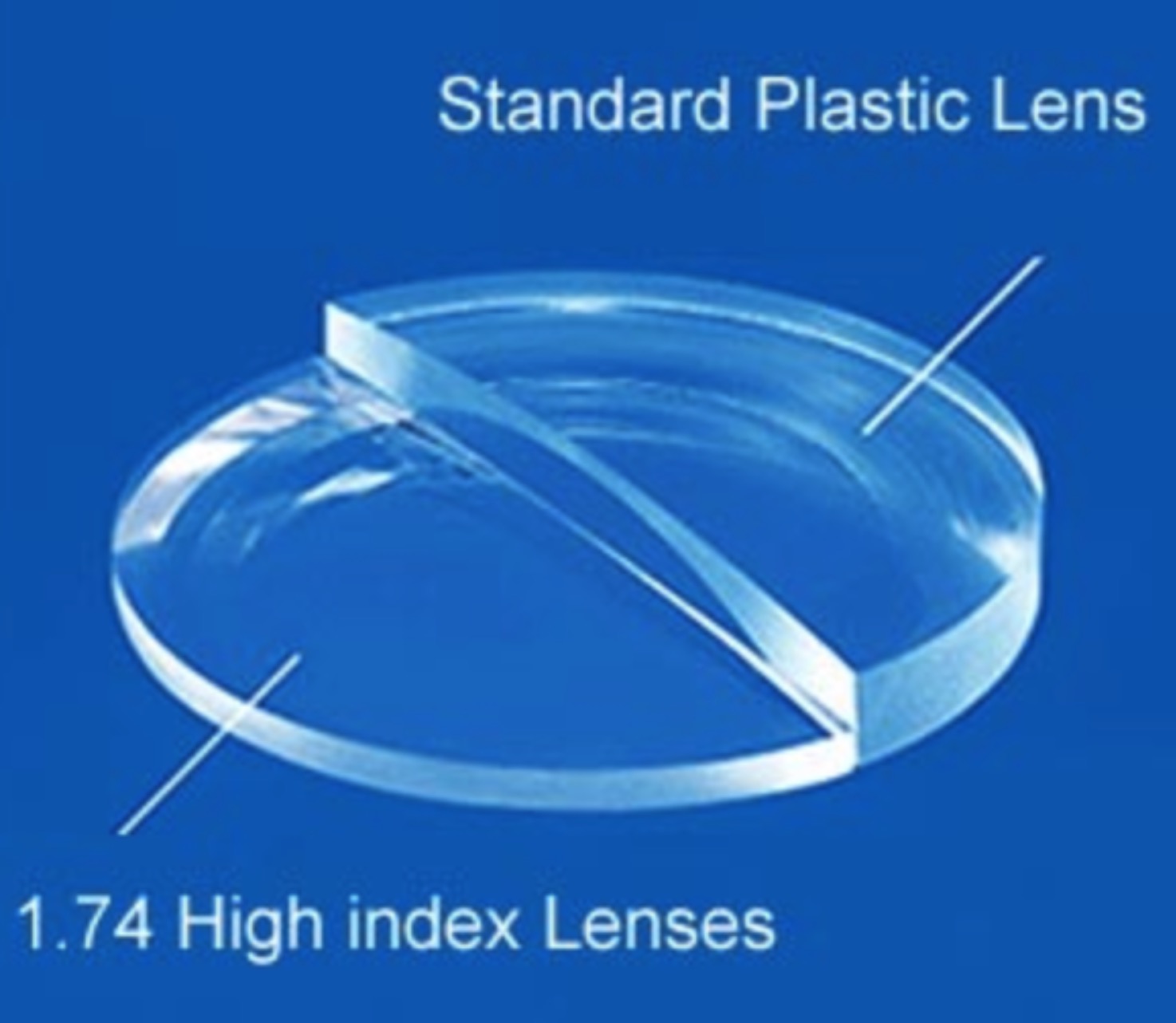
If you want thinner lenses, you might think first of high-index lens materials. The shape and size of your frames matter, too. With custom frames, we can adjust the openings that hold the lenses to suit your prescription and the position of your eyes, while keeping the style you like.
For nearsightedness, thinner edges
Lenses that correct nearsightedness are generally thicker at the edges. A smaller opening that’s well centred in front of the eye can help reduce that thickness. For example, we can round off the outer corner of the lens opening while keeping the overall frame wide enough to fit your face comfortably.
For farsightedness, a thinner centre
Lenses that correct farsightedness are generally thicker in the middle. When the lab can optimise the lens for the exact shape of the frame, a smaller, well-centred opening may allow for a thinner centre. How much thinner depends on your prescription and the type of lens you need.
A frame designed around your prescription
A custom frame also lets us adjust the bridge width to suit the distance between your pupils and how the frame sits on your nose. If you have significant astigmatism, the axis of your correction can also influence which lens shape works best. For progressive lenses, we leave enough height for the lens design you need, including its reading area.
At Les lunettes de l’atelier in Vieux-Hull, Gatineau, we start with a shape you love and tailor its proportions to your measurements and prescription. If you like the lift of a cat-eye frame, for instance, we can give the acetate a sweeping outer corner while keeping the lens opening more rounded. You get the silhouette you wanted, with a frame designed from the start around your lenses.